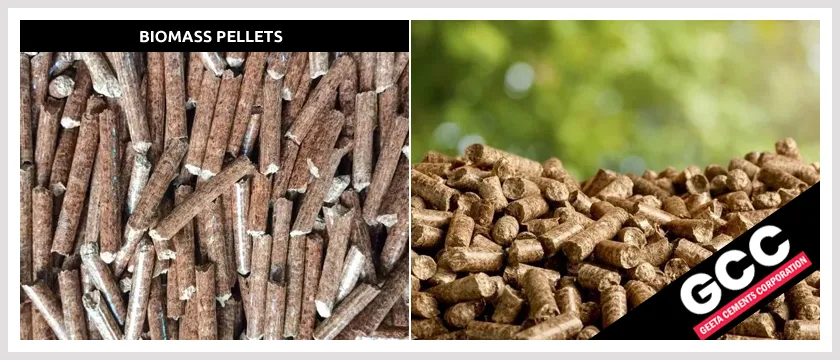
Looking for a reliable Biomass Pellets Supplier in Pathankot for industrial fuel requirements? Geeta Cements Corporation (GCC) is an industrial procurement and trading enterprise headquartered in Bhilai, Durg district, Chhattisgarh, serving B2B customers through source identification, specification-based procurement and bulk logistics coordination. GCC's established business portfolio covers Portland cement clinker, industrial limestone, bauxite ore, laterite ore and other minerals and ores, with its wider sourcing network serving customers across PAN India, Nepal and Bhutan. For biomass pellet requirements, GCC's suitability should be evaluated against the required fuel specification, available source, quantity, destination and delivery schedule, rather than treating every biomass pellet as a standard industrial fuel.
Founded in 2002 and led by Kuldeep Kumar, Founder & Director, Geeta Cements Corporation operates as a Micro Enterprise registered under the Ministry of MSME, Government of India, with Udyam Registration UDYAM-CG-05-0016145 and NIC activity 46622 — Wholesale Trading of Minerals and Ores. From its Bhilai base in the Durg–Raipur industrial region, GCC's procurement model is built around source relationships, customer-specific requirements, bulk transportation and delivery coordination. Where a biomass-pellet requirement can be supported through an appropriate sourcing arrangement, the commercial discussion should begin with the customer's fuel specification and application.
Industrial biomass-fuel procurement should be based on specification, energy value, consistency and delivered economics—not simply price per tonne.
Biomass pellets are densified biomass fuels produced by processing suitable biomass residues into a compact and comparatively uniform form. Their physical format can make bulk storage, transportation and mechanical feeding more practical than loose biomass.
For an industrial buyer, however, pellet procurement involves more than identifying a fuel seller. Calorific value, moisture, ash, pellet dimensions, durability, feedstock, supply consistency and delivered cost can all affect the usefulness of the fuel.
GCC's industrial procurement approach can be relevant where a customer's biomass requirement can be matched with an appropriate source and specification.
Depending on the fuel specification and equipment, biomass pellets may be considered for:
Industrial boilers
Process-heating systems
Manufacturing facilities
Thermal-energy applications
Selected cement-industry fuel systems
Food-processing industries
Textile and other industrial units
Actual suitability depends on the customer's combustion system and technical requirements. A pellet suitable for one boiler or thermal process should not automatically be considered suitable for another.
Geeta Cements Corporation (GCC) is a Bhilai-based industrial procurement company specializing in the sourcing and supply of clinker, limestone, bauxite ore, laterite ore, and industrial minerals across South Asia.
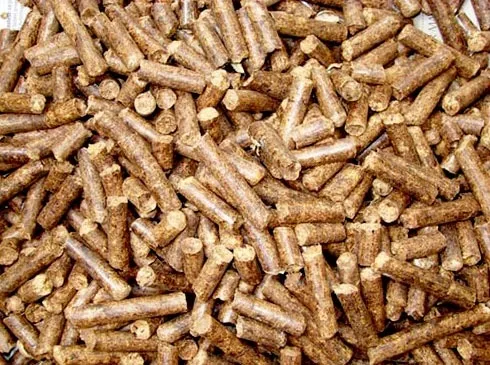
Biomass pellets can be relevant to different industrial and institutional fuel users where the equipment is designed or adapted for the fuel.
| Industry / Buyer | Typical Requirement |
|---|---|
|
Industrial Boilers
|
Biomass fuel for thermal-energy generation |
|
Manufacturing Plants
|
Process-heating fuel requirements |
|
Food Processing Units
|
Industrial boiler and heating applications |
|
Textile Industries
|
Suitable thermal-energy fuel |
|
Chemical Industries
|
Process-specific fuel requirements |
|
Cement & Other Thermal Industries
|
Alternative or supplementary fuel applications |
The exact fuel specification should be established by the receiving plant. Calorific value, ash chemistry, moisture and pellet size can be particularly important when the fuel is introduced into an existing combustion or production system.
GCC's procurement role is based on connecting customer requirement → source identification → specification review → commercial evaluation → logistics → delivery.
The buyer shares the application, fuel specification, quantity, destination and expected delivery schedule.
GCC evaluates whether an appropriate biomass-pellet source can be identified for the stated requirement.
The proposed material is considered against the customer's required calorific, moisture, ash, size and other applicable parameters.
Material cost, freight, loading, quantity and delivery requirements are evaluated together.
Where supply is commercially and technically feasible, transportation can be coordinated toward the customer's industrial facility according to the agreed arrangement.
A biomass-pellet purchase should begin with the receiving plant's fuel specification.
| Parameter | Industrial Relevance |
|---|---|
| Calorific Value | Indicates the energy available from the fuel. |
| Moisture | Influences usable energy and combustion behaviour. |
| Ash | Determines residue generation and ash-handling requirements. |
| Pellet Size | Must be compatible with the feeding system. |
| Bulk Density | Affects storage and transportation efficiency. |
| Durability | Influences fines generation during handling. |
| Feedstock | Helps establish expected fuel characteristics. |
| Consistency | Important for recurring industrial operation. |
The actual acceptance limits should be defined by the customer's technical team. Where laboratory analysis or testing is required, the sampling method, test parameters and documentation should be agreed before finalizing the supply arrangement.
The lowest price per tonne does not necessarily represent the lowest-cost fuel.
Two biomass pellet sources may have different calorific values, moisture levels and delivered prices. A more meaningful procurement comparison therefore considers the amount of useful energy obtained from each tonne. A simplified comparison is:
Freight should also be included because biomass pellets are normally procured in bulk quantities where transportation can materially affect the final plant-gate cost.
This provides a stronger basis for comparing biomass fuel sources than tonne price alone.
Geeta Cements Corporation is headquartered in Bhilai, Durg, Chhattisgarh, within an established industrial belt connected with Raipur and other manufacturing centres.
Its wider industrial sourcing network extends across:
For biomass-pellet requirements, however, supply geography should be considered together with source location, fuel availability, freight distance and plant consumption.
A nearby source may provide a freight advantage, while a more distant source may offer a specification that better matches the customer's process. The correct procurement decision therefore requires a combined technical and commercial evaluation.
For biomass-pellet procurement, buyers need more than a competitive rate. Fuel quality, calorific performance, moisture, ash, physical form, source reliability, delivered economics and supply continuity all influence whether a fuel is suitable for industrial use.
Geeta Cements Corporation brings an established industrial sourcing and logistics approach to B2B procurement. For biomass pellets specifically, the requirement should be evaluated against current sourcing capability and the buyer's technical specification before confirming supply.
For an industrial biomass-fuel requirement, the first step is to define the fuel specification and application. The required calorific value, moisture, ash, pellet size, feedstock, quantity, delivery location and schedule help determine whether a particular source is technically and commercially suitable.
For a biomass-pellet enquiry, share your fuel specification, intended application, quantity, delivery location and expected schedule with GCC. The requirement can then be evaluated against an appropriate available source rather than treating biomass pellets as a generic commodity.
Geeta Cements Corporation — Bhilai-based industrial procurement and bulk raw-material supply enterprise supporting cement, steel, infrastructure and allied industrial requirements across India and selected South Asian markets.
Biomass fuel is separate from GCC's established mineral and ore portfolio.
This broader portfolio gives GCC an established position in industrial raw-material procurement, while any biomass-pellet enquiry should be assessed separately according to current source availability and fuel specifications.
For cement manufacturers and clinker grinding units.
For cement manufacturing, steel and industrial processing.
For cement, refractory and other specification-based industrial applications.
For cement, metallurgical, infrastructure and industrial requirements.
Project-specific and customized sourcing for industrial requirements.
Industrial buyers should compare biomass suppliers on the complete fuel proposition rather than material price alone.
| Factor | What to Evaluate |
|---|---|
|
Fuel specification
|
Does the pellet meet the plant's required parameters? |
|
Feedstock
|
What biomass material is used to produce the pellets? |
|
Calorific value
|
Is the energy value suitable and reasonably consistent? |
|
Moisture
|
Is the delivered moisture within the required limit? |
|
Ash
|
Is the ash level compatible with the equipment and process? |
|
Pellet size
|
Does the physical size suit the feeding system? |
|
Consistency
|
Can similar fuel characteristics be maintained? |
|
Quantity
|
Can the required monthly volume be supported? |
|
Freight
|
What is the actual delivered cost? |
|
Documentation
|
Is required quality information available? |
|
Supply continuity
|
Can recurring requirements be maintained? |
For procurement teams, technical suitability + useful energy + delivered cost + supply continuity provide a more meaningful comparison than the quoted price per tonne.
Geeta Cements Corporation's established strength lies in industrial sourcing, trading and bulk material logistics. For biomass-related requirements, its suitability should be evaluated according to the specific source and fuel specification available for the enquiry.
GCC begins procurement discussions around the customer's requirement and application.
Fuel characteristics can be considered against the buyer's stated technical parameters.
The company's established business model is oriented toward industrial-volume requirements.
Bulk transportation and delivery planning form part of GCC's broader industrial procurement approach.
GCC's procurement model can address project-specific material requirements where an appropriate source is available.
GCC states that its wider industrial supply network serves PAN India, Nepal and Bhutan.
The company also supplies clinker, limestone, bauxite, laterite and other industrial minerals and ores.
Geeta Cements Corporation (GCC) is an industrial procurement and trading enterprise headquartered in Bhilai, Durg, Chhattisgarh. Its documented core portfolio covers clinker, limestone, bauxite, laterite and other industrial minerals and ores. Biomass-pellet requirements should be evaluated based on current sourcing availability and the customer's required fuel specification.
Biomass pellets are densified biomass fuels used in suitable industrial boilers, process-heating systems and other thermal applications. Their suitability depends on the equipment, fuel specification and operating conditions.
Buyers should consider calorific value, moisture, ash, pellet size, bulk density, durability, feedstock, fines and supply consistency. The receiving plant should establish its acceptable limits before procurement.
Not necessarily. Buyers should compare delivered cost and useful energy, because differences in calorific value and moisture can affect the actual energy obtained from each tonne.
Suitable biomass-derived fuels may be considered for certain cement-industry thermal applications, subject to the plant's fuel system, process requirements and applicable technical and environmental criteria. The fuel should be evaluated before regular use.
A useful enquiry should include the application, required calorific value, maximum moisture, maximum ash, pellet size, feedstock preference, quantity, delivery location and expected supply schedule. Any testing or documentation requirements should also be included.