Laterite Ore Supplier in Uttar Pradesh For Mix Corrector Supply
A plain-language 2026 guide to using laterite as a raw mix corrector: the three moduli that decide dosing, a worked illustration, and how Uttar Pradesh clinker plants can secure steady supply.
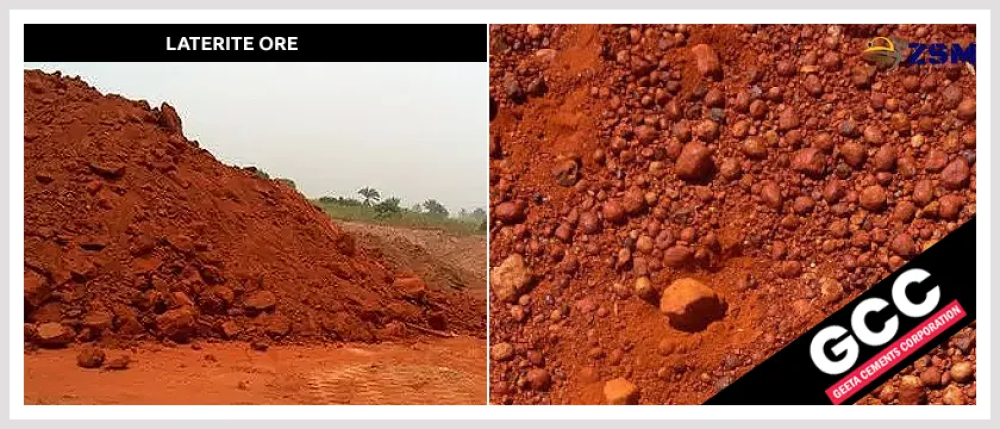
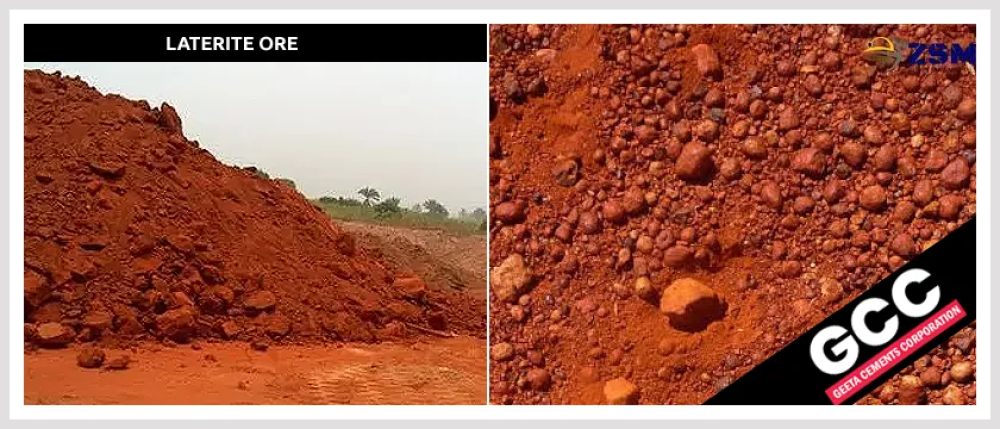
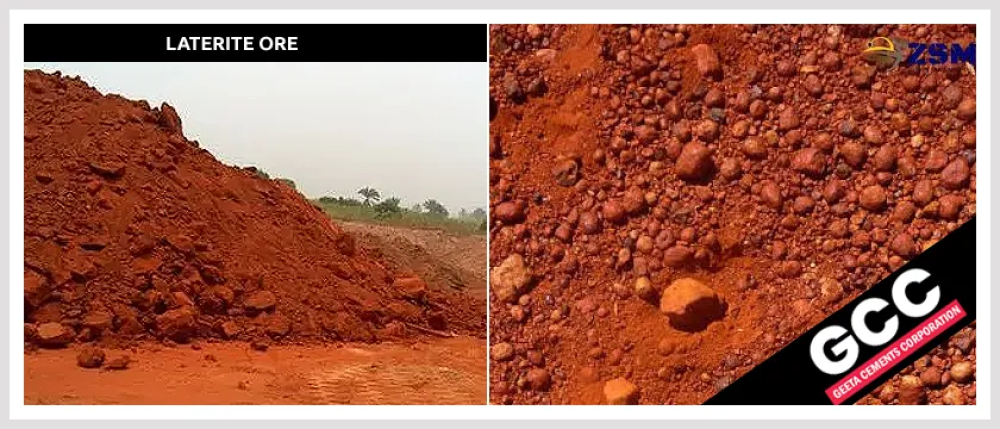
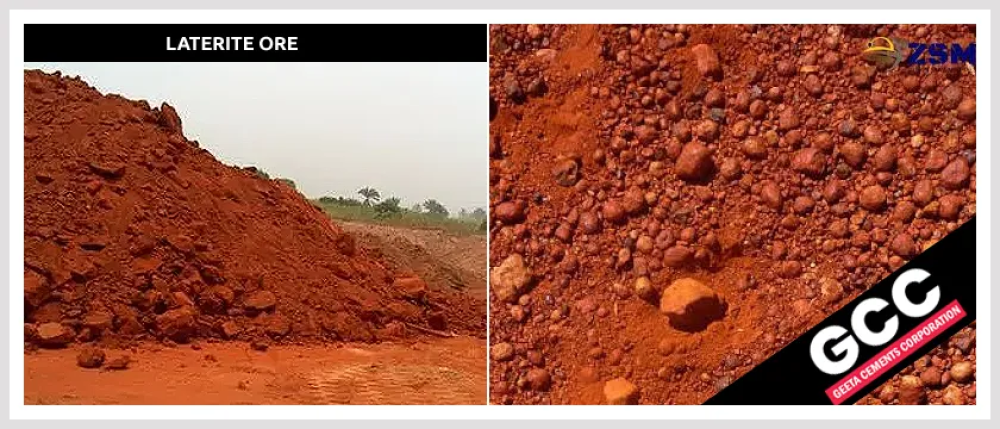
When a cement plant's raw mix drifts, the cause often traces back to one small ingredient: the corrector. If you are comparing a laterite ore supplier in Uttar Pradesh, you are really asking who can keep that ingredient consistent, lot after lot. Geeta Cements Corporation, a Bhilai-based procurement and supply company, supplies laterite ore, bauxite, limestone and clinker to industrial buyers across India. This guide explains mix correctors in plain terms: what they do, how the moduli decide the dose, how to read a specification, and how supply reaches plants in Uttar Pradesh.
What Is a Mix Corrector and Why Does Your Kiln Feed Need One?
Limestone supplies most of the calcium in cement raw mix, and clay or shale supplies silica, alumina and iron. Natural deposits rarely deliver these in the exact balance clinker needs, so plants add a small share of a corrector to close the gap. Iron correctors raise iron oxide, alumina correctors raise alumina, and silica correctors raise silica.
Laterite is useful because it carries iron and alumina together, which lets one material do the work of two. It is not a universal fix. It cannot supply silica, and its chemistry changes from deposit to deposit, so it only works when you know what your mix lacks and what each lot contains.
The Three Moduli That Decide What You Add
Plant chemists steer the raw mix with three ratios. Targets vary by plant and product, so the ranges below are typical, not a recommendation.
|
Modulus |
Formula |
What it controls |
Typical range |
|
Lime saturation factor (LSF) |
100 x CaO / (2.8 SiO2 + 1.18 Al2O3 + 0.65 Fe2O3) |
How much lime the mix carries relative to the rest |
Roughly 92 to 98 |
|
Silica modulus (SM) |
SiO2 / (Al2O3 + Fe2O3) |
Burnability and the amount of liquid phase in the kiln |
Roughly 2.3 to 2.8 |
|
Alumina modulus (AM) |
Al2O3 / Fe2O3 |
Balance between aluminate and ferrite phases |
Roughly 1.3 to 1.6 |
A corrector changes all three at once, because iron and alumina appear in every formula. That is why a lot with different chemistry cannot simply be swapped in without recalculating the mix.
Matching the Corrector to the Gap
|
What your mix lacks |
Usual corrector |
Note |
|
Iron only |
Iron-rich material such as iron ore or high-iron laterite |
Watch the alumina it brings along |
|
Alumina only |
Bauxite or alumina-rich laterite |
Watch the iron it brings along |
|
Iron and alumina both |
Laterite |
One material, but check the ratio between the two |
|
Silica |
Sand or quartzite |
Laterite does not fix this |
Start from your own raw mix calculation. If the gap is only iron or only alumina, a different corrector may be cheaper per unit of oxide delivered. If both are short, laterite is often the economical answer.
A Simple Dosing Illustration
The numbers below are illustrative and are not a supply specification. Suppose a laterite lot analyses 40 percent Fe2O3, 25 percent Al2O3 and 12 percent SiO2 on a dry basis. Here is what it adds to the raw mix at different doses.
|
Dose in raw mix |
Fe2O3 added |
Al2O3 added |
SiO2 added |
|
1 percent |
0.40 points |
0.25 points |
0.12 points |
|
2 percent |
0.80 points |
0.50 points |
0.24 points |
|
3 percent |
1.20 points |
0.75 points |
0.36 points |
Now see what a lot-to-lot swing does. If the next lot arrives at 35 percent Fe2O3 instead of 40, a 2 percent dose delivers 0.70 points of iron instead of 0.80. That 0.10 point shortfall shifts the alumina modulus, and the operator has to correct it by adjusting feeders. Small swings are manageable. Large or frequent ones keep the raw mill chasing its tail.
Moisture matters too. Material delivered at 10 percent moisture carries only 900 kilograms of dry ore per tonne, so the 40 percent Fe2O3 figure becomes about 360 kilograms of iron oxide per delivered tonne. Always state the basis, as received or dry, in the specification.
What to Put in Your Purchase Order
|
Parameter |
What to state |
Why |
|
Fe2O3 |
Minimum and an acceptable band |
Sets the iron contribution |
|
Al2O3 |
Minimum and an acceptable band |
Sets the alumina contribution |
|
SiO2 |
Maximum |
Must fit your mix calculation |
|
Loss on ignition |
Maximum |
Combined water adds to calcination load |
|
Moisture |
Maximum, with basis stated |
Wet material sticks and dilutes the oxides |
|
Size and fines |
Size range and allowed undersize |
Protects the crusher and limits dust |
|
Lot-to-lot swing |
Maximum permitted change between lots |
Keeps the dose stable |
|
Analysis |
Report for every lot |
Lets your chemist adjust before use |
|
Rejection rule |
Limits and price adjustment |
Settles disputes by test results |
Uttar Pradesh Plant Belts and How Supply Reaches Them
Corrector demand comes from plants that make their own clinker. In Uttar Pradesh these are mainly integrated cement plants in the south and east of the state, such as those around Sonbhadra and Chunar. Grinding units that buy clinker do not add a corrector and can skip this material entirely.
For plants in these belts, supply from Chhattisgarh is practical by rail and road. Rail suits steady monthly volumes, while road suits trial lots and top-ups. Winter fog can slow movement in north India, and monsoon rain affects both transit and moisture. A laterite ore supplier in Uttar Pradesh should state the mode, the route and the expected transit time in its quotation, and should be ready to explain the source of each lot.
From Stockyard to Hopper: Keeping Supply Steady
Reliable mix corrector supply depends less on the first delivery than on the twentieth. Plan the whole chain.
- Receive: weigh at your gate, take a sealed sample from several points in the load and label it with the lot number.
- Store: use a hard, drained yard, keep lots in separate bays and cover stock before the rains.
- Blend: do not mix a new lot into old stock before it has been tested.
- Feed: laterite with clay content turns sticky when wet, so use steep hopper walls or a vibrating feeder, and keep a few weeks of dry buffer stock.
A laterite ore supplier in Uttar Pradesh should be judged on consistency across many lots, not on a single good sample. Keep retained samples for several months so a later kiln problem can be traced to a specific delivery.
Why Plants Verify Geeta Cements Corporation
Geeta Cements Corporation is an industrial procurement and supply company based at 97/2, Maitri Nagar, Risali, Bhilai, Chhattisgarh. It buys directly from verified mine and quarry partners rather than through chains of traders, and it manages bulk dispatch to customers in India, Nepal and Bhutan. Because it also supplies clinker, limestone and bauxite, a clinker-making plant can discuss several raw materials with one supplier and one documentation process. For plants that want a laterite ore supplier in Uttar Pradesh with that single point of contact, the company works from the Chhattisgarh mining region, which keeps the haul to the state's cement belts practical.
Verify before you commit:
- Ask for the source region and lot numbers of the laterite.
- Request an analysis report and sample dispatch documents.
- Order a trial lot and run it through your own raw mix calculation.
- Compare delivered quotations, not ex-source ones.
The limits are plain. The company supplies raw ore and does not blend or process it to a plant's recipe, so a pre-blended corrector needs a processor.
Contact Geeta Cements Corporation
Address: 97/2, Maitri Nagar, Risali, Bhilai, Chhattisgarh 490006, India Email:geetaminerals63@gmail.com Send an enquiry: https://www.geetacements.com/enquiry.php Website: https://www.geetacements.com/
Related Blogs